
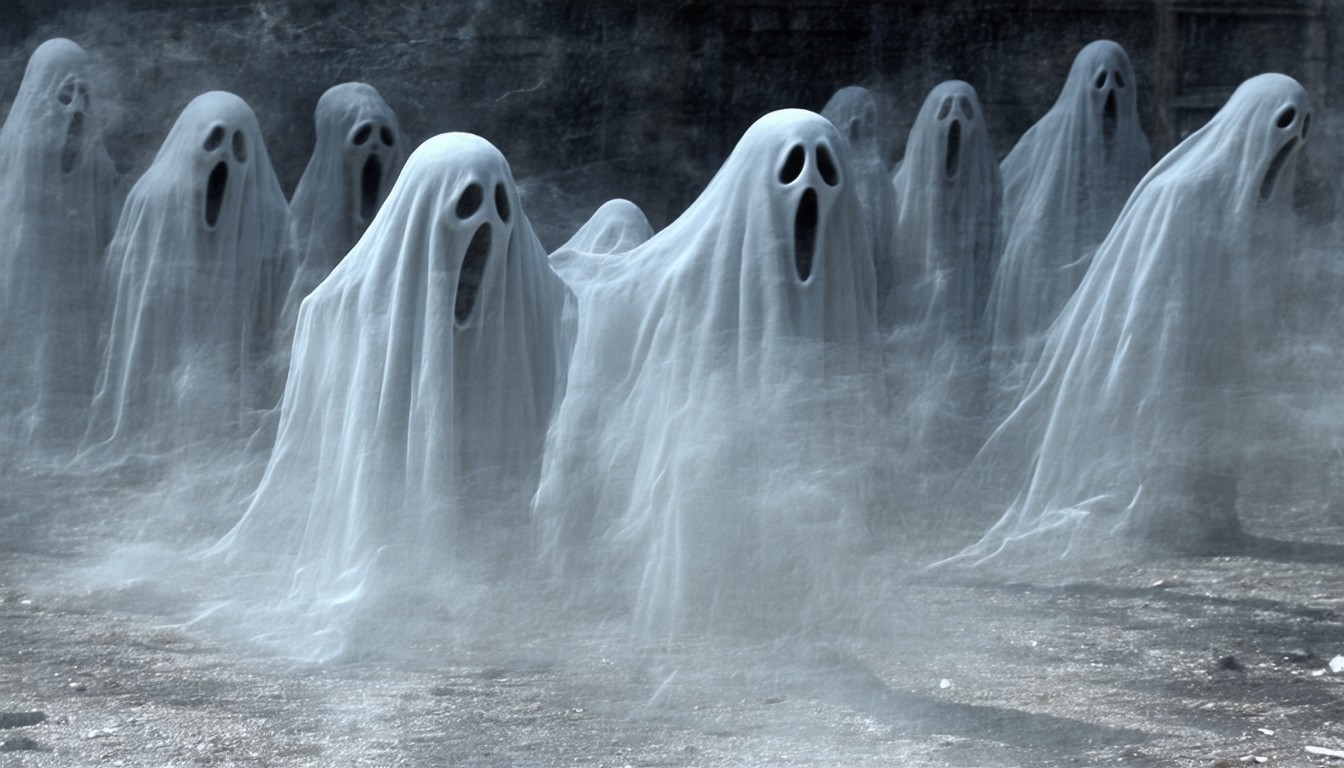

Throughout history and across cultures, few questions persist as stubbornly—and as divisively—as “are ghosts real?” From ancient myths and Shakespearean dramas to modern paranormal reality shows, the existence of ghosts has fascinated, comforted, and unsettled people around the globe. Whether as the spirits of the departed, echoes of trauma, or unexplained phenomena, ghost stories are woven into the fabric of human experience. But despite centuries of anecdotal encounters and haunted tales, hard evidence remains elusive. To understand why the debate endures, it’s essential to examine both the evidence and the beliefs that underpin our persistent curiosity about ghosts.
The Historical and Cultural Landscape of Ghost Belief
Belief in ghosts transcends borders and eras. Archaeologists and historians have found references to spirits in ancient Sumerian texts, Egyptian Book of the Dead passages, and classical Greek writings. In many societies, ghost stories served as moral tales or as explanations for mysterious misfortunes. Even today, a significant portion of the global population reports belief in some form of an afterlife or in encounters with the supernatural.
Surveys in the United States consistently show that about one-third to nearly half of adults believe in ghosts or spirits of the dead. In Japan, the tradition of yūrei—restless spirits—shapes summer festivals and pop culture. Similarly, Latin American folklore is rich with stories of “La Llorona,” the weeping woman whose spirit is said to roam near rivers. These examples reveal that belief in ghosts is not merely superstition—it is a social and psychological phenomenon that adapts to the cultural context.
Scientific Scrutiny: What Does the Evidence Say?
Modern Investigations and Technologies
Despite abundance in testimony, scientific investigation has struggled to substantiate the existence of ghosts. Paranormal investigators often employ EMF meters, infrared thermometers, EVP recorders, and night-vision cameras in the search for spectral activity. While some claim these devices capture unexplainable phenomena, scientific consensus holds that such evidence remains anecdotal and subject to misinterpretation.
For example, electromagnetic field fluctuations can be caused by faulty wiring, while perceived cold spots may result from simple air currents in older buildings. Audio recordings of so-called spirit voices are typically found to be random noise or audio pareidolia—a human tendency to find patterns in ambiguous data.
Psychological and Neurological Perspectives
The scientific community points to several psychological explanations for ghost sightings and paranormal experiences:
- Sleep Paralysis: This phenomenon, in which individuals hallucinate while waking or falling asleep, is frequently reported as terrifying encounters with spirits or presences.
- Pareidolia: The brain’s propensity to find familiar shapes in random information can cause people to “see” faces or figures in shadows, reflections, or static.
- Expectation and Suggestibility: Research indicates that people who expect to encounter something strange in a “haunted” environment are significantly more likely to report unexplained sensations and sightings.
“Most so-called ghost sightings are tied to environmental factors and human psychology rather than external supernatural causes,” says Dr. Christopher French, a professor of psychology specializing in anomalistic psychology.
Notable Cases and Alleged Evidence
The Amityville Horror and the Problem of Hoaxes
Perhaps no story illustrates the conflict between belief and skepticism like the Amityville Horror. In 1975, the Lutz family claimed that their house in Amityville, New York, was plagued by malevolent spirits—a tale that spawned books, movies, and public fascination. However, subsequent investigations revealed inconsistencies in the family’s accounts and a lack of corroborating physical evidence.
Many other famous hauntings, from the Enfield Poltergeist in England to the Winchester Mystery House in California, have drawn crowds and media attention but ultimately offer ambiguous proof. In numerous instances, investigators have later exposed deliberate hoaxes or found alternative, natural explanations.
Unexplained Encounters and Enduring Mysteries
On the other hand, there remain mysterious cases that resist easy explanation. The Eastern State Penitentiary in Philadelphia and Edinburgh’s Mary King’s Close are among locations that draw both tourists and researchers, testifying to continued reports of unexplained voices, apparitions, and other phenomena. While no definitive proof emerges, these stories persist, underscoring the challenge in separating personal experience from measurable reality.
The Human Element: Why Do Ghost Stories Endure?
The resilience of ghost beliefs suggests deeper psychological and societal functions. Ghost stories often serve as coping mechanisms for grief, offering comfort that the deceased remain nearby or continue in another form. Others provide cautionary tales or reinforce social norms.
From a technological perspective, today’s digital age breathes new life into old legends. Online forums, viral social media posts, and popular YouTube channels spread tales—sometimes capturing the collective imagination, other times leading to mass hysteria. The popularity of series like “Ghost Hunters” and horror franchises amplifies both belief and skepticism, ensuring ghosts remain a fixture in public consciousness.
Science Versus Subjective Reality
Scientific inquiry demands reproducible, objective evidence—a standard yet to be met in ghost research. However, the subjective nature of ghost sightings, even if explained by psychology, doesn’t diminish their intensity or impact on witnesses. For some, these experiences are transformative, reshaping their worldview and prompting further exploration into the unknown.
Notably, major universities have established parapsychology laboratories (such as the University of Edinburgh’s Koestler Parapsychology Unit) to apply methodological rigor to claims of the paranormal. While such research has yet to yield clear evidence for ghosts, it recognizes the importance of understanding the cultural, psychological, and physiological foundation behind these beliefs.
Conclusion: Beyond Belief and Skepticism
The question “are ghosts real?” straddles the boundary between science and belief, personal experience and empirical evidence. No study or investigation has conclusively proven the existence of ghosts, yet personal accounts and cultural traditions keep the idea powerfully alive. Whether interpreted through science, religion, or folklore, the search for meaning in mysterious experiences speaks to a universal human need to understand what lies beyond the visible world. For now, ghosts linger not only in old houses, abandoned castles, and shadowy alleys—but in the unexplored corners of the human mind.
FAQs
Do scientists believe that ghosts are real?
Mainstream scientists do not accept the existence of ghosts due to a lack of reproducible evidence. Most reported encounters can be explained through psychological phenomena, environmental factors, or misinterpretations.
Why do so many people report seeing ghosts?
Experiencing grief, emotional stress, or expectation in known “haunted” places can prime the mind to interpret ambiguous stimuli as paranormal. The brain’s tendency to find patterns and stories also contributes to vivid ghost sightings.
Are there any famous ghost encounters that remain unexplained?
Several well-known cases, such as the sightings at Eastern State Penitentiary or the Enfield Poltergeist, remain mysterious. However, none have produced concrete evidence upon rigorous scientific review.
What tools do ghost hunters use in investigations?
Paranormal investigators commonly use EMF meters, digital audio recorders for EVPs, infrared cameras, and temperature gauges. Despite their popularity in media, these devices have not produced conclusive proof of ghosts.
Can ghost experiences be dangerous?
Most encounters are benign, but individuals experiencing extreme fear or distress may benefit from counseling. Persistent or frightening hallucinations could indicate a need for medical evaluation.
Why are ghost stories so persistent in modern culture?
Ghost stories fulfill various psychological and social needs, from explaining the unknown to expressing grief or enforcing community norms. They also thrive in the digital era, where storytelling can reach vast audiences instantly.







Leave a comment