
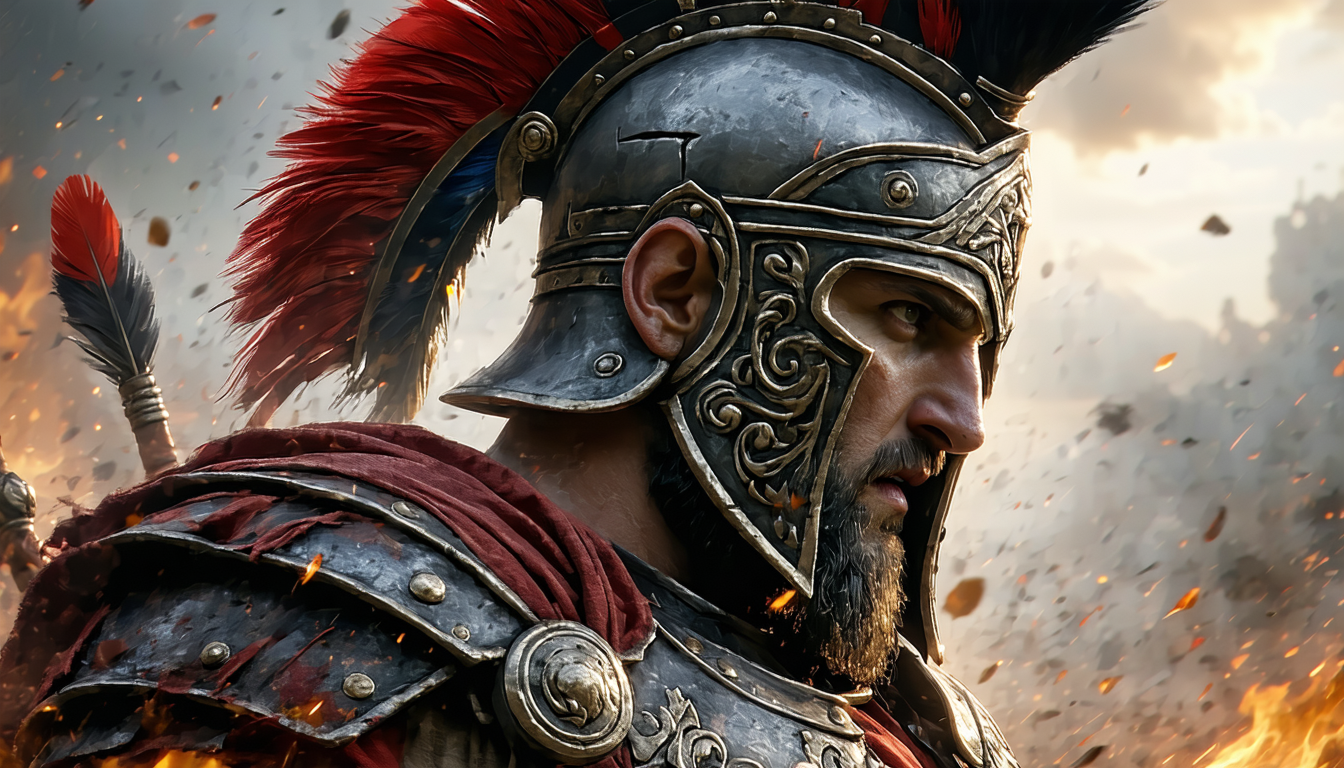

Ares, frequently dubbed the Greek “god of war,” is far more nuanced than the simple image of a bloodthirsty brute. His story weaves through powerful symbols, complex myths, and cultural reflections that still resonate today. This isn’t a polished myth for textbooks; think of it as though you stumbled into a conversation at a museum café—imperfectly fascinating, with sparks of insight and little missteps here and there. Ready? Let’s dig into the life, legends, and lingering legacy of Ares.
Domains and Symbolism of Ares: Fierce, Full of Contradiction
Ares embodies raw martial energy—physical aggression, courage wrapped in chaos—but there’s a deeper side too. Beyond mere battle frenzy, he represents primal instincts: virility, survival, anger, even protection in its most forceful form (mysticryst.com).
He comes with a toolkit of iconic symbols:
– Spear, sword, helmet, armor, shield—markers of battle readiness and warrior identity (theoi.com).
– Chariot, torch, boar—symbols of mobility, destruction, and ferocious, untamed power (university.awakenche.org).
– Animals like vultures, dogs, snakes, owls—a gruesome mix signifying death, destruction, and the savage aftermath of war (theoi.com).
These symbols aren’t decorative—they’re narrative tools, storytelling in metal and fur, reminding us that Ares is war in its rawest form.
Myths and Relationships: Power, Embarrassment, and Humanity
Ares doesn’t just smash through myth; he’s often defeated or humiliated in the stories—an interesting twist for anyone associated with dominance. In The Iliad, he switches sides mid-battle, is wounded by Diomedes (with Athena’s clever aid), and gets flung off the battlefield (theoi.com). It’s almost as if the Greeks liked reminding themselves: even the god of war isn’t invincible.
His affair with Aphrodite led to a legendary humiliation—caught in a golden net by her husband Hephaestus, exposed before the gods, and mocked mercilessly (theoi.com). And that’s not his only awkward moment; he was once trapped in a bronze jar by two giants for over a lunar year, only freed thanks to Hermes and Artemis (en.wikipedia.org).
These stories underscore a central idea: Ares embodies impulse and conflict, yes, but also the inevitable folly that follows unchecked aggression.
The Contrast with Athena: Strategy vs. Savagery
A striking, repeated theme is his contrast with Athena—the calculated, wise strategist versus the rage-fueled brawler. In mythology and art, Ares represents brute force; Athena, the disciplined mind (greekhistoryhub.com).
This duality frames ancient Greek views of war: it can be honorable and noble—or senseless and destructive. As one modern commentary puts it, Ares is neither wholly villain nor hero, but a necessary acknowledgment of war’s brutal reality (greekhistoryhub.com).
The Archetypal Ares: Then and Now
Ares isn’t just ancient myth—he’s an archetype alive in modern consciousness. In new interpretations, he stands for instinct over deliberation, courage over caution, urgency over hesitation (mymythos.org).
“The truth isn’t found in pondering; it’s forged in the heat of the moment you decide to act.” (mymythos.org)
This quote captures the essence: Ares as primal life force, the burst of courage before you even think, the energy to break through fear or inertia. But there’s a shadow too—his energy can protect or destroy, boundary-defend or unchecked dominate. The archetypal Ares reminds us that power without reflection risks burning everything to ashes (mymythos.org).
Symbolism Through Time: Culture, Rituals, and Influence
Ares’ presence wasn’t limited to stories—he was worshipped (albeit ambivalently) in several Greek cities. Some held ceremonies to bind or restrain his spirit for protection; others ritually chained his statues, symbolically controlling the destructive force he represented (en.wikipedia.org).
Moreover, similar concepts of war deities appear in Thracian and Scythian cultures. There, gods bear the dual nature of war: life-giving wind and death-bearing sword. These deities—akin to Ares—were sometimes worshipped through weapons or ritual offerings (en.wikipedia.org).
These echoes highlight a shared human impulse: to confront war’s power, sometimes through awe, other times through containment or even reverence.
Conclusion: The Legacy of Ares—Complex, Cautionary, Charged
Ares is not your typical war god. He stands for primal courage and raw force, yes—but also for impulsiveness, embarrassment, and the consequences of unchecked rage. His symbols (spear, shield, vulture, dog) paint him as realist rather than romantic. And contrasted with Athena’s strategic grace, he becomes a caution: might without mind can destroy.
In modern reflection, Ares may be that rush of action before your brain catches up—the protector, or the bully. He warns us that every spark of power brings both possibility and peril.
FAQ
Is Ares purely evil or destructive?
No, not at all. Ares represents the unfiltered energy of conflict, which can serve protection or aggression depending on context and control.
Why isn’t Ares as beloved as Athena in Greek culture?
Because Athena embodied strategy, wisdom, and honorable warfare—qualities more admired than blind strength and chaos (en.wikipedia.org).
Do modern cultures still reference Ares?
Yes, indirectly. The archetype appears in literature, psychology, and symbolic traditions as the embodiment of primal courage and the warning of rage’s risk (mymythos.org).
Ares remains one of mythology’s most potent reminders: the force within us calls for discipline as much as it does valor.








Leave a comment