
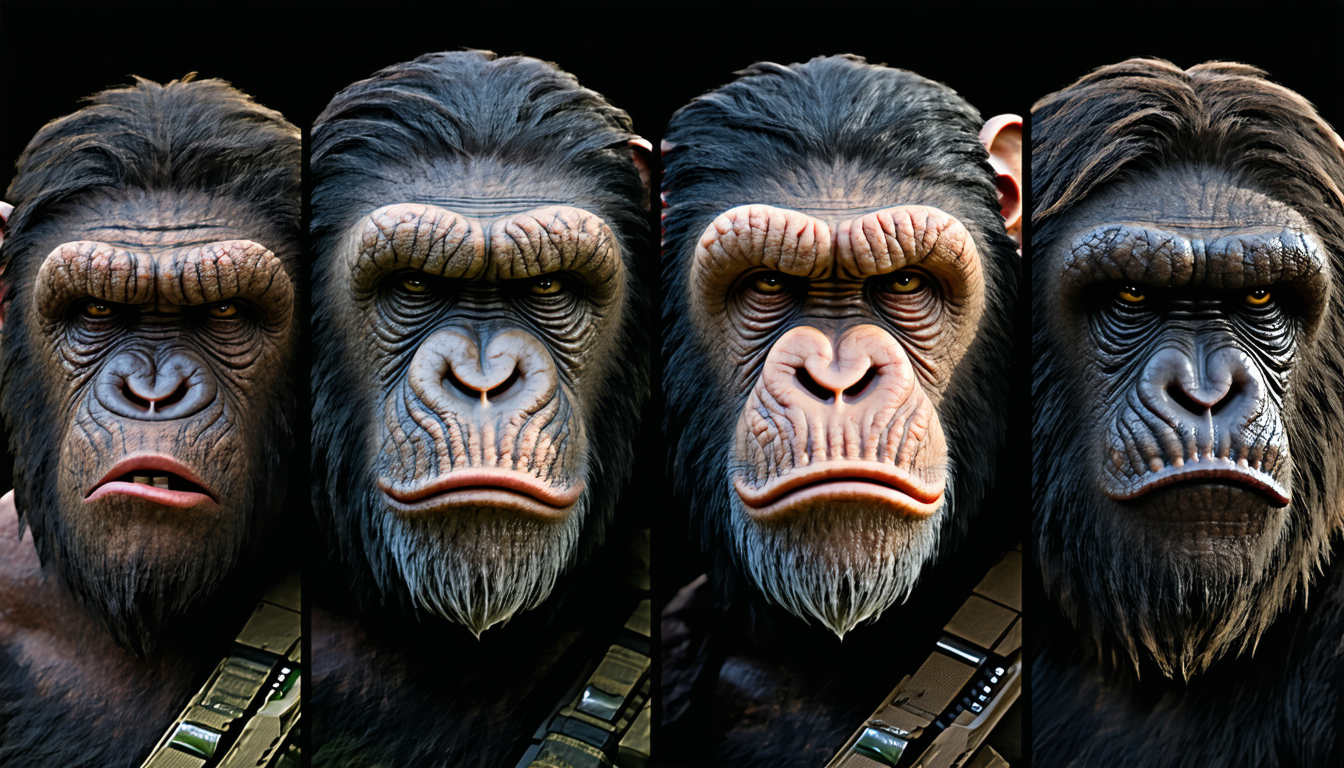

Introduction: Rediscovering the Original Planet of the Apes Movies
Another dive into a timeless sci-fi saga—Original Planet of the Apes Movies: Complete Guide to the Classic Film Series—takes you back to that uniquely unsettling vision of a world turned upside-down. These films, produced between the late 1960s and early 1970s, remain remarkable in cinematic canon for their meditations on society, power, and evolution. This guide weaves narrative context, modest analysis, and a bit of conversational flair to help you appreciate the originals as more than relics—they’re cultural keystones that still provoke discussion today.
Classic Foundations: Why the Original Series Still Matters
The original Planet of the Apes series began with a breakout 1968 film, followed by four sequels over just a few years. Together, they chart a journey that shifts from pure adventure into philosophical territory, exploring:
- A twisted reflection of humanity’s flaws
- Political allegory and civil rights undertones
- Innovative make-up and production design that still earns admiration
Beyond that, many modern remakes and reboots have taken cues—from storytelling arcs to visual motifs—demonstrating a legacy that spans decades. Even though not every sequel hit the elevated tone of the original, the entire franchise stands as a showcase of creative risk-taking during a pivotal era in Hollywood.
Exploring Each Film, Briefly But Insightfully
The Planet of the Apes (1968): A Start With a Punch
From that iconic twist ending to the unsettling landscape of primate-dominated Earth, the original sets a high-water mark. The sheer audacity of its narrative and production design made it feel urgent, even chaotic, in a way that’s still thrilling today.
Beneath the Planet of the Apes (1970): Bolder, Maybe Too Bold
This second installment doubled down on the shock factor with new characters and a much darker underbelly—quite literally, an underground mutant society. It took risks, perhaps too many, but it’s fascinating as a mirror of Cold War anxieties and 1970s cynicism.
Escape from the Planet of the Apes (1971): Time Travel and New Perspectives
Taking a sharp turn, the third film brought apes into 20th-century Earth. Suddenly, it’s not just about jungle ruins; it’s about cultural collision, fear of “the other,” and how societies react to radical change.
Conquest of the Planet of the Apes (1972): A Revolution and Its Price
This entry, gritty and politically charged, follows the rise of Caesar and that simmering apes-versus-human conflict. It’s raw and moody—like trying to depict a revolution using only brick walls and fur.
Battle for the Planet of the Apes (1973): Fragile Peace in Question
The final film asks: What happens after revolution? In a tentatively peaceful world, old hostilities still simmer. It wraps up loose ends, though a bit too neatly—yet still leaves you thinking about legacy, leadership, and whether peace is ever truly stable.
Thematic Threads Across the Series (You Thought There Were Plenty Already…)
What links these films beyond talking apes? A few strands that keep binding them as a cohesive whole:
- Human reflection: Humanity’s self-destructive instincts echo in every simian character and societal structure.
- Power struggles: Be it oppression or revolution, each story lays bare the mechanics of power.
- Cultural commentary: Civil rights, militarism, fear of mutation, revolution—these aren’t just themes, they’re social snapshots of the era.
- Visual storytelling: From the broken Statue of Liberty to hand-crafted ape garb, imagery carries weight—perhaps even more than dialogue in spots.
It’s like each film is a lens angled slightly differently, yet all reflect the same core: humankind’s uneasy relationship with itself and its institutions.
Impact and Legacy: More Than Just Monkeys With Attitude
These films, especially the first two, left an indelible mark on pop culture. From countless parodies to ironic references, from fashion cues to blockbuster structures—they’ve done more than entertain, they’ve influenced.
In industry terms, they helped define sci-fi as not just spectacle, but social commentary. Later films and TV shows lifted the baton, but these originals carried it first—with grit and brain.
And of course, later reboots and remakes often nod back. Whether through tone, lore, or iconography, that lineage shines through. Everything from visual aesthetics to philosophical questions carries an unspoken debt.
Conversational Anecdote: A Little Imperfect Chat
Sometimes I wonder if one guy backstage just dropped the Statue of Liberty prop on purpose—like a prank that turned legendary. But realistically, that smashed statue probably came from years of concept painting and miniature model work, all aimed to hit viewers in the gut. It does, though—every single time. That’s the kind of storytelling bravery these films dared to try.
Expert-Style Insight
“Few franchises so boldly into identity, society, and human folly, framed within sci-fi motifs that still resonate decades later.”
This isn’t hyperbole, but rather reflection on storytelling that insists we look back at ourselves, even through the lens of talking apes. The original Planet of the Apes series is still a textbook case in how genre can illuminate the human condition.
Why This Matters Today
Even as CGI-heavy blockbusters chase spectacle, the original Planet of the Apes movies remind filmmakers and audiences alike that ideas—wrapped in strong visuals—still carry the day. With current trends favoring character-driven sci-fi (thanks to hits like Dune and Foundation), there’s renewed appreciation for how narrative heft mixes with invention.
And here’s a thought: in today’s streaming era, revisiting these films might spark interest in a new generation—one that’s grown up on ultra-polished digital landscapes but still craves storytelling that rattles your philosophies.
Conclusion: Timeless Apes, Modern Resonance
To sum up: the original Planet of the Apes movies comprise a layered, sometimes flawed but always compelling look at humanity through a simian mirror. Each film pushes different boundaries—technically, narratively, thematically—and together they form a body of work that outlasts trends.
For fans and newcomers alike, it’s well worth retracing those jungle paths, ruined monuments, and revolutionary lines. And for modern storytellers, the series stands as a template on how to imbue genre films with cultural weight and provocative imagination.
Quick Takeaways
- The original film (1968) remains the most iconic, thanks to its twist and visual storytelling.
- Sequels followed bold narrative shifts—from underground horror to time travel and revolution.
- Continual themes include identity, power structures, and social commentary framed in sci-fi.
- Legacy endures in how genre media today balances spectacle with ideas.
- Commercial and cultural echoes persist in modern reboots, reimaginings, and visual homages.
Let me know if you’d like to add FAQs, adjust the tone, or expand sections!








Leave a comment