
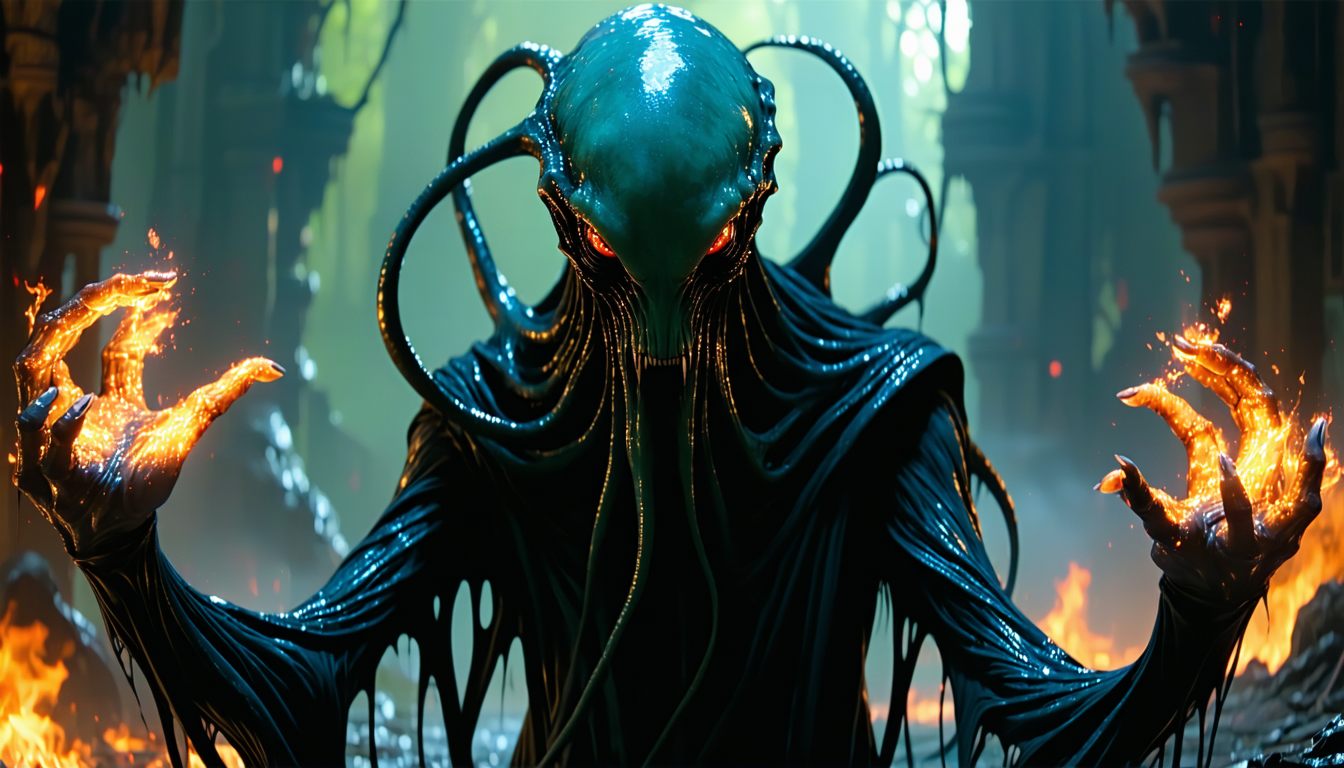

A shadow creeps across the eerie fabric of Hawkins, Indiana—a creature of unfathomable power and chilling intent: the Mind Flayer. Beneath its monstrous visage lies a narrative rich with horror, cosmic menace, and a perfect mirror to the human psyche. Let’s delve into the origins, powers, and narrative role of this unforgettable force from Stranger Things, exploring how it shapes the series and resonates in real-world cultural contrasts.
Origins: From Dread to Dimension-Crossing Threat
The Mind Flayer originates from the Upside Down, a parallel, decaying realm that mirrors reality in a sinister, rotting fashion. First hinted at in season two, it emerges more fully—a being of shadow and malevolence with a form that distorts space, time, and sanity.
This creature isn’t simply another monster in the forest; it’s symbolic of a creeping, intangible evil—part biological, part existential threat. It reflects the darker corners of the unknown, where fear isn’t drawn by fangs but by forms unseen and motives incomprehensible. In that sense, the Mind Flayer embodies not only a horror villain, but an idea: the creeping dread of what we don’t understand.
Powers and Abilities: Shadows, Control, and Cosmic Horror
Psychic Domination and Hive Control
One of the most unnerving attributes is its ability to infiltrate minds and bodies. It doesn’t just kill—it dominates. Hosts become part of its hive mind, puppets carrying out its will. This psychic assimilation elevates it from beast to systemic evil. It’s not enough to defeat it; one must resist its very essence.
Environmental Manipulation and Reality Warping
The creature’s hold isn’t limited to flesh. It spreads tendrils—liche-like bleeds of shadow—that corrupt the environment. Buildings decay, landscapes warp, and even biology mutates. It isn’t just a monster; it’s a force that reshapes reality itself, reminding us of nature’s fragility when confronted by unchecked influence.
Cosmic Scale and Multidimensional Horror
Unlike ordinary threats, the Mind Flayer taps into cosmic horror—the notion that the universe is vast, indifferent, and often hostile. Its domain extends beyond Hawkins, suggesting that what lies beneath—or behind—our reality might be waiting, eager to expand. The stakes feel enormous, if abstract: defending not just lives, but the integrity of reality.
“It isn’t just feeding on Hawkins—it’s consuming the idea of safety itself.”
This quote underscores the psychological weight it carries over mere body count.
Role in the Narrative: A Catalyst for Community and Conflict
On one level, the Mind Flayer is the season villain. But at a deeper, more human level, it sparks conflicts, alliances, and transformations. Characters confront personal fear through the threat it embodies—the secret-wielder (Will) becomes a locus of trauma, while his friends rally against what they barely understand. The monster unites them.
This interplay reminds us of real-world metaphors: unseen threats—cultural, political, or existential—can fracture or galvanize communities. The show uses horror to ask: when the threat is invisible and overwhelming, where do we turn? Who becomes the hero?
Real-World Resonance: Echoes of Contagion and Collective Trauma
Beyond TV tropes, the Mind Flayer allegorically resembles phenomena like social anxiety, ideological contamination, or even global pandemics. It creeps, infects, and reshapes behavior before you notice. The scene where tendrils pulse across familiar settings—cafes, school halls, suburban streets—mirrors how real-life crises invade mundane life.
Moreover, the hive-mind theme touches political and technological anxieties—echoing fears about mass surveillance, radicalization, or misinformation ecosystems. Stranger Things uses the familiar (kids on bikes, sleepy towns) to amplify unease: the ordinary is often the easiest to hijack.
Diversity of Thought: Responding to Fear Differently
Each character confronts the Mind Flayer distinctively. Eleven faces it with a mix of empathy and psychic force; Hopper wields courage and stubborn love; Joyce fights with anxiety-fueled determination. These varied responses demonstrate that confronting existential dread isn’t one-size-fits-all—sometimes empathy works, sometimes brute force, sometimes endurance.
From a storytelling perspective, these conflicting strategies enrich the narrative, showcasing that collective resilience often blends multiple strengths.
Summary of Core Insights
- The Mind Flayer originates from a dark mirror dimension—the Upside Down—exemplifying cosmic dread more than monster horror.
- Its powers span psychic manipulation, environmental corruption, and reality distortion—making it a multidimensional threat.
- Narratively, it catalyzes community action and personal sacrifice, transforming fear into unity.
- Symbolically, it resonates with real-world threats that infiltrate everyday life: contagion, ideology, digital surveillance.
- Characters’ responses highlight that confronting existential threats requires both strength and diversity of thinking.
Concluding Thoughts
In Stranger Things, the Mind Flayer is more than a villain—it’s a prism through which the show explores fear, identity, and resilience. From psychic terror to emotional catharsis, it forces characters and viewers alike to question: what costs are we willing to pay to preserve normalcy? And what does “normal” mean when it can be undone so easily? Ultimately, the Mind Flayer reminds us that darkness might be inevitable—but how we resist defines who we are.








Leave a comment