
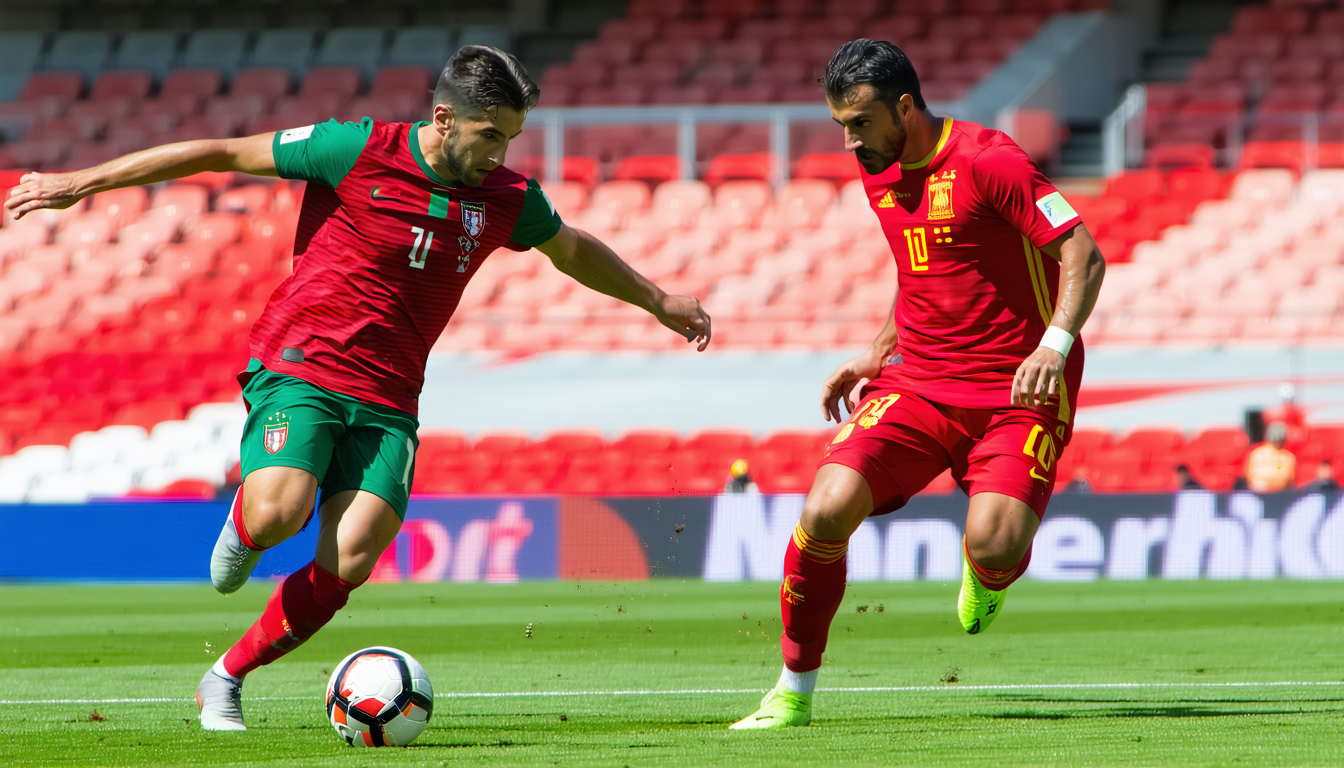

Few rivalries in Europe ignite debate like a Portugal versus Spain fixture. Not just because of shared history or a border—it’s the football itself: two philosophies, two ways of seeing the game. For fans, previewing the Portugal national football team vs Spain national football team lineups isn’t just about knowing who plays where; it’s about reading into tactics, hopes, and whispers of legacy. Yet, the “ideal” squad? It often lives somewhere between the coach’s master plan and unpredictable last-minute changes.
History Sets the Stage: A Brief Rivalry Context
The rivalry has been played out over decades, usually with high stakes—European Championships, World Cups, and fiery friendlies. Memories flood back to Euro 2012, when Spain edged Portugal in a nerve-shredding penalty shoot-out, or that memorable 3–3 draw at the 2018 World Cup, lit up by Cristiano Ronaldo’s hat-trick.
Some say Spain’s “tiki-taka” dominated a whole era, while others will argue that Portugal’s blend of technical flair with defensive grit often proves equally effective. But lineups? Coaches tinker each time—sometimes with unexpected surprises, sometimes out of necessity.
Expected Lineups: Who’s Likely to Start?
Every manager has favorites, and every announcement sparks instant reaction. Nothing is cast in stone. These days, the fatigue of a packed club calendar, little knocks (or dramatic training ground photos online), and players “suspended outta nowhere” can all shake things up last minute.
Portugal’s Likely Formation and Key Players
Portugal typically lines up in a 4-3-3 formation, but don’t bet your house on it. Some days you’ll see a 4-2-3-1, especially if the midfield needs more bite. Assuming everyone’s fit (and that’s a big if, by the way), you might expect:
- Goalkeeper: Diogo Costa or Rui Patrício (if he’s not injured—sometimes he is)
- Right Back: João Cancelo, as he often marauds forward, offering width
- Central Defenders: Rúben Dias and Pepe (yep, still going somehow—until he isn’t)
- Left Back: Nuno Mendes—if healthy, otherwise maybe Raphaël Guerreiro
- Midfield: Bruno Fernandes in a creative role, João Palhinha for steel, and possibly Vitinha or Bernardo Silva for movement
- Attackers: Cristiano Ronaldo (obviously, unless he needs a rest), with Rafael Leão and Diogo Jota flanking
Here’s the thing: Sometimes Jota gets dropped for André Silva (if goals are missing) or the midfield’s reshuffled if someone’s off form. Flexibility is the main rule.
Spain’s Approach to Selection and Tactical Shape
Spain, still married to a variant of possession-heavy football, rarely strays from a 4-3-3 (with occasional tweaks based on the opposition). Defensive solidity often rests on Aymeric Laporte and Dani Carvajal, while the flair comes from midfield and wide areas.
- Goalkeeper: Unai Simón is usually the pick, barring any wild late changes
- Defense: Carvajal (right), Laporte (center), Pau Torres or Nacho—left back typically Jordi Alba, but he’s not always available lately
- Midfield: Rodri is a near-guaranteed starter, with Pedri and Gavi offering energy and creativity. Sometimes Koke appears, sometimes not.
- Forwards: Alvaro Morata leads the line (unless injured or off-color), flanked by Ferran Torres and maybe Nico Williams or Dani Olmo
You’d be surprised how quickly things can get shuffled before kickoff. Some coaches see “fitness issues” no one knew about, or toss on a youngster for fresh legs.
Analytical Perspectives: More Than Just Eleven Names
There’s always noise on social or sports radio: Will Bruno Fernandes tuck in to support Ronaldo, or go wide? Will Spain risk a ‘false nine’ if Morata’s having a goal drought? Tactical debate is almost as fierce as the game itself.
The Battle in Midfield: Control, Creativity, and Risk
It’s not just a cliche—these battles are won or lost in midfield. Portugal’s recent shift toward allowing more freedom for their creative players contrasts with Spain’s almost obsessive retention of the ball. Experts point out:
“When Spain and Portugal meet, the midfield transitions are like a chess game—every move met with three in reply,” says former coach Carlos Quieroz. “One team loses patience, and that’s when gaps open up.”
Will Palhinha’s physicality muzzle Spain’s intricate passing? Maybe, but no guarantees. And if Spain’s passing carousel clicks, even Portugal’s robust setup gets stretched.
Defensive Variability: Solid Lines or Slipped Chances?
People used to talk about Spain’s all-conquering defense under Ramos and Piqué, but now? Laporte is steady but the backline occasionally looks suspect under pressure. Portugal’s mix of youth and experience can mean brilliance or the odd shaky moment—remember Pepe’s then-legendary clearances followed by sudden lapses? Even the best teams look vulnerable when a new player steps in last minute.
Human Factors and Prediction Puzzles
Beyond shape and stars, other unpredictable things play a part:
- Morale: Team’s mood after a patchy run (or some viral off-field drama) can make a difference.
- Weather/fatigue: No one plays magic football on a rain-logged pitch in Porto. Meanwhile, travel schedules and relentless club fixtures leave some legs tired.
- Manager choices: Sometimes a bold, risky substitute works, sometimes it backfires in a big “what were they thinking?” way.
Fans endlessly debate these variables, sometimes missing the entirely left-field events—a breakout performance by a debutant, or a star red-carded for a moment of madness.
Notable Recent Encounters: What Lineups Tell Us
Let’s look at the most recent big-stage matchup. In the 2022 UEFA Nations League, both teams fielded close-to-strongest squads but made tactical tweaks:
- Portugal opted for Leão’s pace over a more “solid” midfielder, hunting a decisive goal.
- Spain reversed their trend, benching a typical starter to plug a defensive gap.
It’s easy to second-guess afterward. Would Portugal have kept the lead with fresh legs sooner? Should Spain have risked a young attacker earlier? Yet, as seen countless times, games between these two never quite follow the script.
Unique Lineup Dynamics and Individual Impact
While lineups can be analyzed on paper, there’s always a human element. Pepe yelling at teammates, Ronaldo orchestrating with gestures, or Gavi’s boundless energy. Maybe this time a sub emerges to turn the tide, like Eder did in Euro 2016 for Portugal. Unexpected heroes, or sudden errors—no lineup can ever guarantee those moments, but that’s what keeps fans glued.
Conclusion
Previewing the Portugal national football team vs Spain national football team lineups is as much about tactics as it is about drama, unpredictability, and personality. No amount of spreadsheet-logic covers a deflected shot or surprise hero. In reality, whatever the predictions or planned formations, the match is decided as much by the mood, adaptability, and courage on the day as it is by pre-selected names.
FAQs
Who are the key players to watch for Portugal and Spain?
For Portugal, Cristiano Ronaldo, Bruno Fernandes, and João Cancelo often have a significant impact. On Spain’s side, Pedri, Rodri, and Alvaro Morata are typically central to their play.
How often do these teams change their lineups?
Both teams regularly tweak their lineups based on injuries, opposition, and player form. International football’s intensity means changes are common—even at the last minute.
What formation does Portugal usually play against Spain?
Portugal tends to favor a 4-3-3 but occasionally switches to a 4-2-3-1 for added midfield control, depending on tactical needs and available players.
Which recent match best shows their tactical rivalry?
The UEFA Nations League matches, especially the 2022 encounter, highlighted both teams’ tactical flexibility and willingness to adapt lineups during high-pressure moments.
Are there any young breakout players to watch for?
Spain’s Gavi and Nico Williams have drawn attention with energetic displays, while Portugal’s Nuno Mendes and Vitinha appear poised for bigger roles in the near future.
How do injuries typically affect these matchups?
Injuries often force late lineup adjustments, which can disrupt game plans or provide opportunities for less-experienced players to shine (or falter). Coaches must adapt quickly to keep their teams balanced.




Leave a comment