
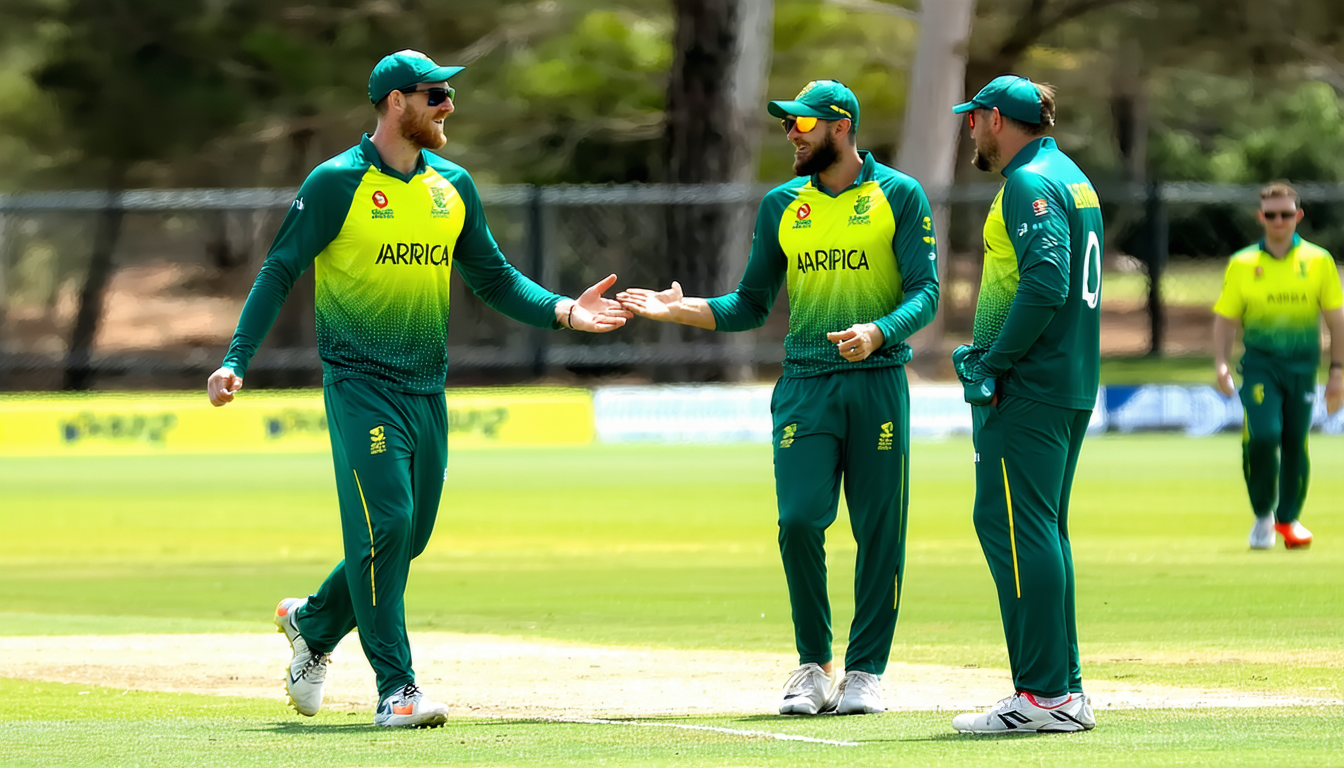

A contest between the Australian men’s cricket team and South Africa national cricket team isn’t just about the stats or even the occasional banter. It’s one of those sporting matchups packed with unpredictability—something about the fierce pride and confusing weather (sometimes both in one day) in both countries seems to translate straight onto the pitch. But what really makes these showdowns special is the composition of their squads: a blend of legends, workhorses, and the genuine surprises who come out of nowhere. Let’s dig beyond the headlines and take a closer, human look at what sets the players apart—sometimes in ways numbers can’t quite explain.
Historical Context: A Rivalry Built on Complexity
When talking about these cricket teams, the easy angle is to reel off the matches—the nail-biting 1999 World Cup semi-final, the mercurial performances in Tests, or the see-saw battles in recent ODI and T20 series. But, honestly, it’s about more than just stats. Australia and South Africa bring different philosophies, sometimes clashing approaches to the mental and physical side of the game.
Back in the late nineties and early 2000s, Australia was at its most dominant—think of names like Steve Waugh, Glenn McGrath, or a young Ricky Ponting. South Africa, after returning from isolation, fought fiercely for their place, unleashing Allan Donald, Shaun Pollock, or Jonty Rhodes. These weren’t just cricketers—they were symbols of their nations.
“What you get with South Africa-Australia is not just competition, but culture and character clashing. That’s why the records keep getting broken, the games unpredictable,” says former Proteas captain Graeme Smith.
The rivalry oscillates in intensity, based on form, leadership, or just plain luck (we all remember Herschelle Gibbs’ dropped catch, right?).
Key Differences in Player Styles and Attitude
Australian Toughness vs South African Resilience
The Australian men’s cricket team is famous for its tough, almost brash approach—‘sledging’ is a word often thrown about, for better or worse. Players like David Warner, Mitchell Starc, or, in the recent past, Steve Smith, are seen as both gifted and gritty. They embrace the mental battle, pushing opponents as much with words as with deliveries.
On the flip side, South Africa is often labeled the “chokers.” Honestly, that’s a bit unfair—because their players, like AB de Villiers or Kagiso Rabada, have regularly defied expectations under pressure. There’s a stoicism in the way guys like Faf du Plessis or Quinton de Kock walk onto the pitch, clearly determined but rarely flustered.
And then, of course, there are those wildcards—Cameron Green for Australia or Aiden Markram for South Africa—guys who explode onto the international scene and rewrite all the neat labels.
Skills on Display
- Australian Batting Order: Aggressive openers, a powerful middle order, and tail-enders who can stick around. Warner and Labuschagne tend to frustrate bowlers, while Travis Head can change a Test in a session.
- South African Pace Battery: Fast bowlers are almost a birthright—think Kagiso Rabada, Lungi Ngidi, or Anrich Nortje. These bowlers play on bouncier, pace-friendly pitches at home—so it’s kind of bred into their cricket from day one.
- Fielding Units: Australia typically fields like their life depends on it (and sometimes it does; ask Ricky Ponting), while South Africa’s acrobatics—remember Jonty Rhodes at the 1992 World Cup?—have set standards across generations.
Selection Philosophies and Trends
Both countries have evolved in their approach to selecting squads—often responding to public outcry or changes in cricket’s business side (IPL, Big Bash, etc.).
Australia: Leaning Heavily on Experience
For a long time, Australia stuck to a core group—and it often paid off. The selectors, sometimes stubborn, sometimes conservative, favor form and history. Guys in their thirties, like Usman Khawaja or Nathan Lyon, still anchor the team. When the newer blood comes in (like Green or Marcus Stoinis), there’s often a razor-thin margin for error—one bad test and you’re wrestling for a Shield spot again.
South Africa: A Pipeline in Flux
South Africa has, in recent years, seen a mix of youthful energy and painful transitions—senior players retiring, overseas Kolpak deals draining talent, and new policies on racial transformation. So, the squad might seem a bit in constant flux. Players like Temba Bavuma carry immense responsibility—not just with the bat, but as symbols of broader social progress.
Interestingly, South Africa’s domestic structure still produces wild talent—youngsters like Dewald Brevis are tipped as possible breakout stars.
Notable Encounters and Individual Brilliance
Perhaps what sets this rivalry apart are the moments individuals have stepped up—and sometimes unraveled. It’s not only the established stars, but also unsung heroes or unlikely performers.
The 1999 World Cup Semi-final: Drama Redefined
Everyone knows that tied semi-final—one of the most electric ends to any cricket match. The final moments with Lance Klusener and Allan Donald’s run-out are etched forever, not just for South Africans, but for any cricket fan who’s ever played backyard cricket and thought, “Not now, mate, not now.”
Classic Series: Modern Icons
Smith’s broken hand at the SCG, bowling through pain. Mitchell Johnson’s moustache, scaring batsmen in 2014. Steve Smith’s twin centuries. Or Markram’s coming-of-age knocks. These games weren’t always perfect cricket; sometimes they were gritty, ugly, or—let’s be honest—messy. But the personalities shone through.
Diversity of Talent: Unpredictable Elements
A lot of focus always lands on the stars—Smith, Warner, Rabada, de Kock. But both teams tend to foster unexpected game-changers. There was Nathan Lyon (once a groundsman), suddenly bamboozling world-class batters. Or Keshav Maharaj, who—let’s admit—doesn’t look like a menacing spinner, yet holds his own anywhere.
Unlike the 1990s, both squads now contain more diversity—not just across backgrounds, but in playing styles and cricketing philosophy. South Africa regularly fields players of different heritage, while Australia’s Indigenous and multicultural representation, though slower, is (finally) growing.
The Pressure of Influence: Media, Money, and Public Expectation
Beyond the boundary, it’s a different contest. In Australia, a string of losses can blow up into national debate. For South African cricketers, the baggage sometimes runs even deeper—issues of politics, race, and national healing never far away. All this, on top of sponsorship money, social media, and the lure of T20 leagues. Not surprisingly, some players find the expectation suffocating—while others thrive.
“Modern players are not just athletes—they’re public figures, marketing assets, and sometimes political symbols. The pressure, frankly, is immense,” observes Proteas cricket journalist Telford Vice.
Oddly, this sometimes works in favor of the rivalry—every series is a “must win”; every dropped catch or wicket has a subtext.
Conclusion: More Than a Scorecard
Australia’s and South Africa’s cricket clashes mean more than winning or losing. The drama, characters, and histories woven through both squads guarantee every series is unpredictable—one reason diehard fans keep coming back, even when the clock says 3 a.m. and you’ve got work the next day.
The differences in player selection, styles, and backgrounds create a healthy (if chaotic) melting pot of modern cricket. Looking ahead, as new stars emerge and old ones eventually retire, this rivalry won’t just survive—it’ll keep reinventing itself. There’s no algorithm for heart, after all.
FAQs
Who are some iconic players in the Australia vs South Africa rivalry?
Legendary names include Ricky Ponting, Steve Smith, and Glenn McGrath for Australia; and AB de Villiers, Allan Donald, and Jacques Kallis for South Africa. Each has played pivotal roles in match-defining moments over the years.
What makes these teams’ styles so different?
Australia is often defined by aggressive batting and relentless fielding, while South Africa is known for its fast bowling arsenal and resilience under pressure. Both squads, however, feature diverse talents and approaches shaped by their local conditions and cultures.
Has either team dominated the matchup historically?
Australian teams have often had the edge in World Cups, while South Africa has clinched more Test wins on Australian soil than many other touring sides. The head-to-head is fairly balanced, with dramatic swings in form.
Are both teams focused on introducing new talent?
Yes—Australia tends to balance experience with introducing standout performers from domestic cricket. South Africa, meanwhile, is managing generational changes while maintaining a robust pipeline of young talent despite some challenges from player migration.
How do off-field issues affect player performance?
Off-field factors, including media scrutiny and political pressures, can weigh heavily on both teams—sometimes resulting in unexpected selection choices or added emotional edge during matches. These pressures sometimes impact players’ form, for better or worse.
What’s next for the rivalry?
Upcoming series promise more drama as both teams blend experienced hands with ambitious newcomers. With the evolution of formats and increasing global scrutiny, future clashes are likely to remain fiercely contested and highly watched by fans worldwide.




Leave a comment