
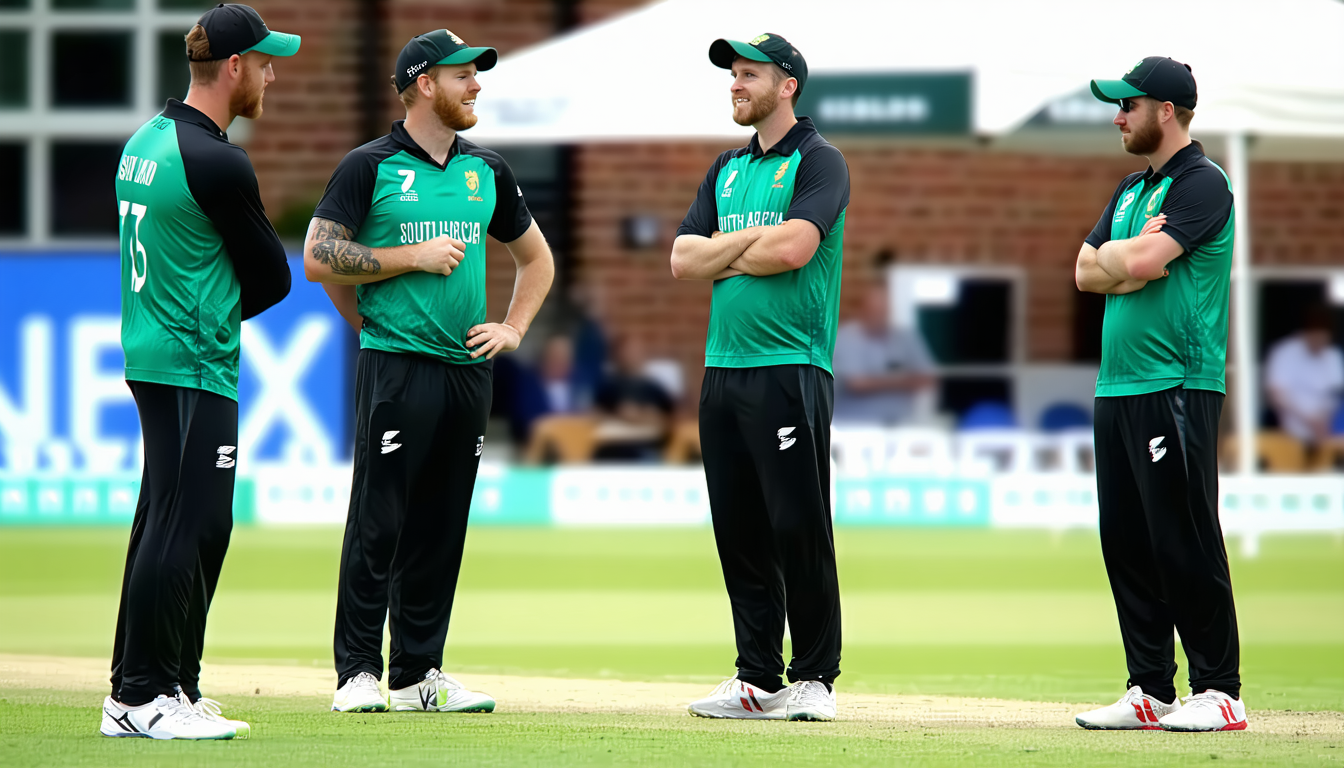

Cricket is a game full of history, but the rivalry between South Africa and New Zealand has always been a bit different than the typical ‘giants vs underdogs’ drama. It’s not as loud as England vs Australia, but ask fans from either nation, and you’ll soon realize the tension lives on, match after match. So, the timeline—if you want to call it that—is full of twists, rain delays, heartbreaks, and those awkward moments where you just think, “Wait, didn’t that guy just play for the other team last season?” Let’s walk through it—a little messy, like real cricket always is.
Beginnings and Interrupted Paths (1932–1970)
First Encounters and Early Impressions
South Africa played their first Test against New Zealand in 1932 in Christchurch. Back then, it wasn’t exactly front-page news, everyone was still mulling over England and Australia most of the time. The Proteas swept that opening series, to be honest, quite easily. That probably annoyed the Kiwis, but international schedules were sparse—no six-week tours, no one-dayers.
But cricket changed, and so did the teams. South Africa, brimming with talent, largely had the upper edge. New Zealand, honestly, didn’t win much in those decades. Yet both sides learned something; the Kiwis developed a sort of never-say-die grit, while the South Africans became known for their almost mechanical, clinical style.
The Great Exile
By the 1970s, apartheid led to South Africa’s sporting isolation. The timeline here is strange—you literally have a gap, almost twenty years, where the two sides never crossed paths on the field. Most players from this generation on both sides never met each other outside the odd county match in England. For a rivalry, that’s, well, not ideal.
The Modern Era Begins (1990s–2000s)
Cricket Returns: A New Chapter
Come 1992, after almost a generation, South Africa was back. Their first series after returning—held in New Zealand—was a strange affair. Both teams were a little rusty, audiences unsure what to expect. In fact, the first ODI South Africa played post-apartheid was in New Zealand. The games were tight—South Africans scraping victories, Kiwis showing flashes of brilliance, but not quite getting over the line.
By the mid-1990s, both sides had big stars: Hansie Cronje and Allan Donald for the Proteas, Stephen Fleming and Chris Cairns for New Zealand. But South Africa, again, looked stronger on paper and mostly on the field too. The 1995-96 Test series, for example, was dominated by SA’s fast bowling. Yet, the gap was closing.
Changing Fortunes: The ICC Knockouts
It wasn’t until the one-day and T20 revolutions that things got really unpredictable. New Zealand, in particular, started playing the sort of cricket that made commentators run out of adjectives. In the 2003 Cricket World Cup, for example, the format and the Duckworth-Lewis method came into play, leaving South Africa eliminated on home soil after a painfully tense match against the Kiwis.
A South African fan once said after that match:
“No fixture between us is ever dead. It’s always last-over, rain, or just cricket at its unpredictable best.”
Every time these two sides met in ICC events, drama wasn’t far behind—almost as if fate really enjoyed making both teams sweat.
Pinnacle Clashes: 2010s and the Big Stage
2011-2015: Knockout Matches and World Cup Heartbreak
Few cricket fans can say they don’t remember the 2015 World Cup semi-final between South Africa and New Zealand. That game in Auckland—seriously, just try searching “Grant Elliott six” and see if Kiwi fans aren’t still replaying it. For the South Africans, it’s one of those “what if” moments, another entry into their history of World Cup heartbreaks.
India’s ESPNcricinfo called it “one of the greatest games in World Cup history.” New Zealand, chasing 298 in a rain-reduced game, needed five from two balls. Grant Elliott smashed Dale Steyn over long on—Kiwi fans went into delirium, South Africans just… stood silent.
Beyond the heartbreak, though, that match was pure drama. South Africa fought till the end, de Villiers clutching his head in disbelief. In many ways, it summed up the modern rivalry: hard-fought, full of mutual respect, still capable of producing nerve-wracking moments.
Test Upsets and Tight Finishes
While ODIs produced the big headlines, Test cricket between these teams never lost its edge either. In 2017, New Zealand managed to force South Africa into a draw in Wellington—the sort of gritty cricket that both teams seemed to specialize in. Rain has a funny way of turning up too often.
Rivalry, Style, and Contradictions
Styles Make Clashes
It’s tempting to label South Africa versus New Zealand a lopsided rivalry, numbers-wise. Historically, South Africa often had the upper hand in series. But that’s if you just look at stats. On the pitch, things aren’t so tidy.
South African cricket is built on aggressive fast bowling, tall quicks charging in, sharp fielding—almost intimidating. Kiwis, on the other hand, bring a scrappy, sometimes tactical approach. They punch above their weight, use their resources smartly (who can forget Chris Harris’s slow dibbly-dobblers, or Tim Southee swinging it on green-tops).
But, fans from both sides argue—sometimes over beers, sometimes online—that the matches are closer than raw records suggest. New Zealand have, in the 21st century especially, become far more competitive, not just at home but away as well.
Players Who Defined the Timeline
You can’t talk about this rivalry without mentioning a few names:
– Jacques Kallis and AB de Villiers, who often seemed to anchor South Africa’s innings against the persistent Kiwis.
– Brendon McCullum, who brought an aggressive Kiwi style that matched, and sometimes beat, the Proteas at their own game.
– Kagiso Rabada and Trent Boult, the new-age pace-spearheads, delivered thrilling spells against each other.
Honestly, you could make a whole timeline out of just their duels.
Where Are We Now? (2020s and the Ongoing Saga)
The last few years have seen cycles of dominance, injury setbacks, and COVID weirdness. South Africa still has the edge in most formats, but New Zealand won the inaugural World Test Championship in 2021—proving they’re no pushovers on the biggest stage.
With cricket schedules constantly jammed (sometimes you can’t even keep up with which format or even which country’s hosting), there’s often a sense that the next New Zealand vs South Africa clash could throw up, well, anything. Weather chaos? A double century? Super Over?
There are debates among cricket purists (and fans sipping instant coffee at midnight, because of the time zones) about which matches really matter most. Some say it’s the big knockout games. Others reckon any bilateral Test, on a green pitch or under the Highveld sun, has its own magic.
Conclusion: A Timeline Still Being Written
Across close to a century, the timeline between the South Africa and New Zealand national cricket teams has been anything but straightforward. Interrupted by politics, shaped by drama, and colored with individual brilliance, it stands as a testament to cricket’s unpredictability. It’s a rivalry still evolving, still capable of the unexpected, and—by any metric—one of the sport’s most quietly enduring stories.
For fans, analysts, and even players, the encounters hold a certain truth: you can never really predict what’s going to happen between South Africa and New Zealand. Blink, and you miss a plot twist. In a way, that’s exactly what keeps everyone coming back.
FAQs
When did South Africa and New Zealand first play each other in cricket?
Their first official Test match was played in 1932, with South Africa touring New Zealand. The Proteas quickly established early dominance in this initial series.
What are some of the most memorable matches between these teams?
Most fans highlight the 2015 Cricket World Cup semi-final, alongside tense Test matches in the mid-90s and the dramatic group game in the 2003 World Cup that saw South Africa eliminated.
Has South Africa or New Zealand had the upper hand overall?
Historically, South Africa has a better head-to-head record in both Tests and ODIs, but New Zealand has closed the gap since the 2000s, particularly in major tournament knockouts.
Why were there long gaps in matches between these sides?
Due to apartheid-related sporting bans, South Africa was excluded from international cricket for nearly 20 years (1970–1991), creating a significant break in the rivalry.
Which players have been central to this rivalry?
Key figures include Jacques Kallis, AB de Villiers, Hansie Cronje, and Kagiso Rabada for South Africa; and Stephen Fleming, Brendon McCullum, Grant Elliott, and Trent Boult for New Zealand.
Do these teams still play high-stakes cricket?
Absolutely. Both sides regularly meet in bilateral series and global tournaments, where matches often turn into memorable, close-fought contests regardless of form or rankings.




Leave a comment