
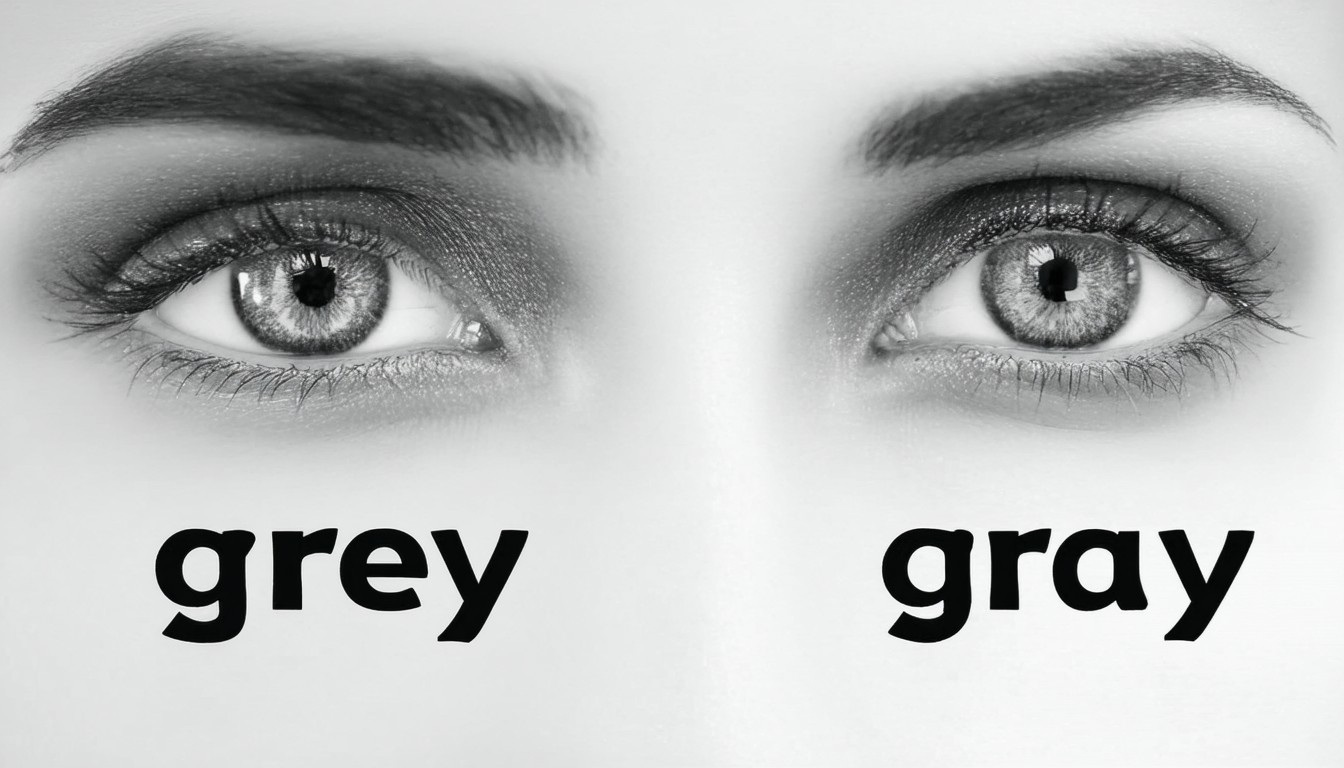

Language, like fashion, has its subtle regional variances. Nowhere is this more apparent than in the debate over “grey” or “gray.” On the surface, the two spellings may seem inconsequential, yet they represent deeper divisions—geographic, historical, even cultural. To writers, editors, designers, and anyone navigating global communication, the difference can be both a puzzle and a point of precision. This article unpacks the origins, meanings, and correct usage of both “grey” and “gray,” delves into their evolution, and advises on when (and why) one should be chosen over the other.
The Linguistic Roots: Where Do “Grey” and “Gray” Come From?
The divergence between “grey” and “gray” dates back centuries. Both words stem from the Old English “grǣg,” a term used for the neutral color between black and white. The spelling discrepancy emerged over time as the English language fragmented and evolved.
Historical Evolution and Regional Preferences
By the 18th century, English spelling was solidifying, but transatlantic differences soon arose. In Great Britain and its former colonies (excluding the US), “grey” became standard. Meanwhile, Noah Webster’s spelling reforms in 19th-century America favored simplified spellings, including “gray.” This pattern reflected Whitney’s assertion:
“Language is a habit, and habits differ in different places and among different people.” — William Dwight Whitney, linguistic scholar
The upshot? Both “grey” and “gray” are etymologically legitimate—just tailored to different versions of English.
Geographic Usage: Where “Grey” and “Gray” Dominate
British English vs. American English
- British English: “Grey” is overwhelmingly the spelling of choice in the UK, Ireland, Australia, New Zealand, and Canada.
- American English: “Gray” prevails in the United States, appearing in everything from school textbooks to road signs and branding.
This split extends into media, literature, and digital content. Analyzing major dictionaries and language corpora further cements the distinction: the Oxford English Dictionary lists “grey” as primary, while Merriam-Webster prioritizes “gray.”
Real-World Examples
Beyond academia, the difference can be seen in product names and pop culture. The “Grey Cup” is awarded in Canadian football, while the “Gray Wolf” is native to North America. Even computer programs reflect regional coding standards; Adobe Photoshop, for instance, spells out its grayscale functionality according to the user’s system settings.
Nuances in Style, Science, and Design
Editorial and Branding Standards
With more documents and brands going global, understanding which form to choose can be a matter of consistency and professionalism:
- Journalism: Publications follow national guidelines—The Guardian would use “grey,” while The New York Times sticks to “gray.”
- Corporate Branding: International businesses may localize color spelling depending on market; for example, a UK-based clothing line advertises “grey trousers” while its American counterpart ships “gray pants.”
Scientific and Technical Contexts
In scientific nomenclature, context is everything. “Gray” is used as the SI unit for absorbed radiation dose, named after British physicist Louis Harold Gray—regardless of location. Yet, for general discussions of hair color or weather, regional spelling applies.
Has the Spelling Shifted Over Time?
Usage data from digital libraries and search engines reveals fluctuations. For decades, “gray” and “grey” traded places in British and American texts—sometimes due to typesetting constraints, other times via regional publishing deals. In the digital age, spell-checkers frequently default to local spelling, but web globalization means mixed usage is increasingly visible online.
It’s noteworthy that both versions are broadly understood worldwide—incorrect only when used inconsistently within a regional or brand context.
How to Choose: A Practical Guide for Writers and Brands
Consistency is Key
When writing for a UK, Australian, or Canadian audience, “grey” is typically expected. For American readers or markets, “gray” is standard. For brands with international presence, it’s best to localize according to the country or region.
Quick Reference Tips
- Match the spelling to your audience’s dialect.
- Follow editorial or brand style guides, if available.
- Stay consistent throughout a piece or communications campaign.
When Both Are Acceptable
Some technical fields or academic texts may tolerate either spelling, provided it remains consistent. Digital products or services aimed at a global market often pick the variant they use in the user’s local language setting.
The Role of “Gray Area” and Idioms
It’s also important to note popular idioms. Phrases like “gray area”—meaning an ambiguous situation—are usually spelled with “gray” in the U.S. and “grey” elsewhere. The choice here should again match the dominant spelling pattern for the intended readership.
Conclusion: Embrace Regional Accuracy, Foster Clarity
In sum, there is no “more correct” spelling between “grey” and “gray.” Each has a rightful place in the mosaic of English. By understanding the historical, regional, and contextual nuances, professionals can ensure their writing is both accurate and attuned to their audience. For brands and writers alike, consistency and clarity are paramount—reinforcing professionalism and reader trust.
FAQs
Is there a difference in meaning between “grey” and “gray”?
No, both words describe the same neutral color between black and white. The difference lies purely in regional spelling preference.
Which spelling should I use for international audiences?
Consider your primary audience. Use “grey” for British/Commonwealth readers and “gray” for U.S. audiences. For truly global communications, choose one variant and apply it consistently or localize the spelling by region.
Why do some scientific terms always use “gray”?
In science, “gray” refers to the radiation dose unit, standardizing terminology internationally regardless of regional spelling variations for color.
Can I mix “grey” and “gray” in one document?
It’s best to avoid mixing both in a single piece, as this can create an impression of inconsistency or careless editing. Pick one spelling according to your intended audience and maintain it throughout.
Are there idioms that use one spelling over the other?
Yes, idioms like “gray area” follow regional spelling. American English uses “gray area,” while British English prefers “grey area.” Always match the idiom’s spelling to the regional variant you’re using elsewhere in the text.














Leave a comment