
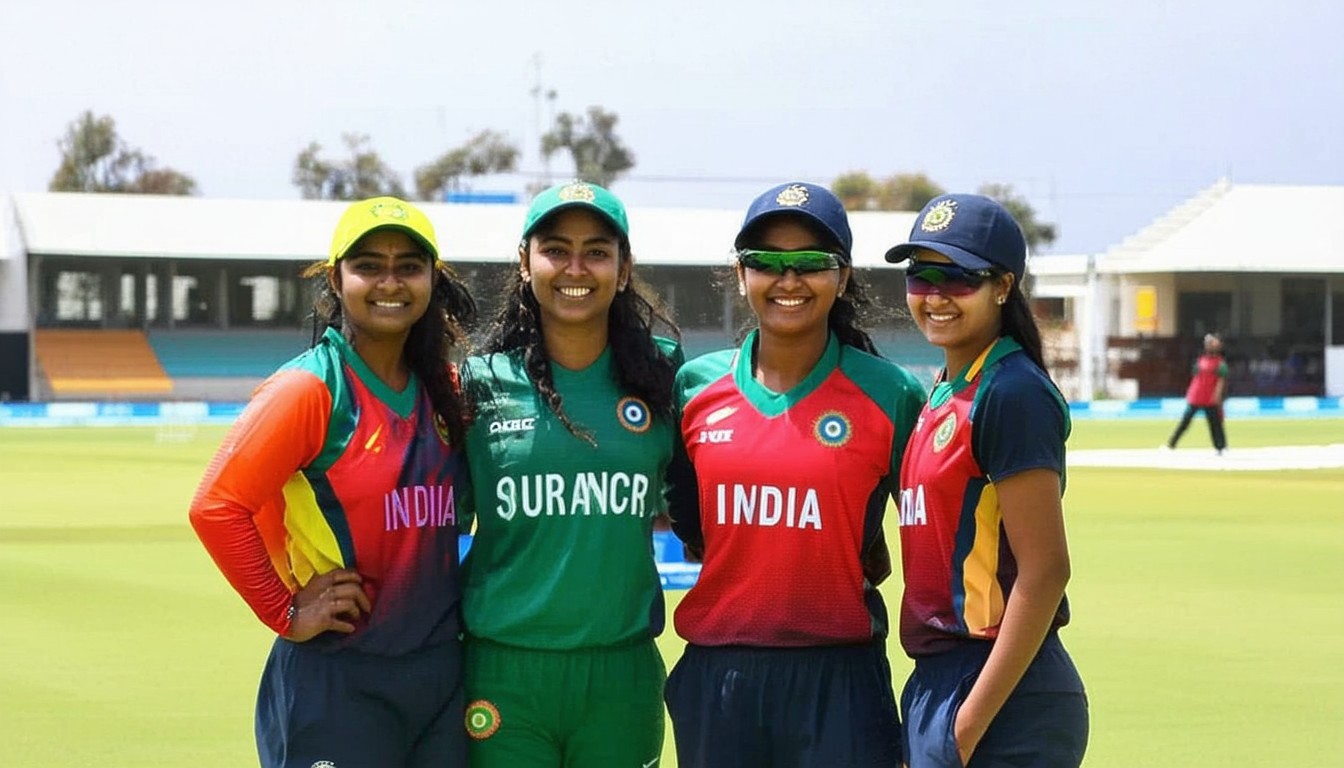

When the India Women’s National Cricket Team faces off against the South Africa Women’s National Cricket Team, it’s never just another game—it’s a showcase of evolving rivalries, rising stars, and the relentless pursuit of cricketing excellence. As women’s cricket gains heightened visibility and investment, each encounter between these teams draws attention not only for the results but also for the stories behind the scoreboard.
Setting the Stage: The Growing Intensity of Women’s International Cricket
The recent series between India and South Africa signaled the strengthening of both squads in the global women’s cricket landscape. Both nations have invested considerably in talent identification and coaching, bringing depth and skill to their line-ups.
India, with seasoned campaigners like Harmanpreet Kaur and Smriti Mandhana, continue to build on the foundation laid over the past decade. On the other hand, South Africa, led by stars such as Laura Wolvaardt and Marizanne Kapp, have harnessed a new generation of multi-talented athletes. As a result, fixtures between these two sides are increasingly competitive and impactful for ICC rankings.
Recent Encounters and Trends
Looking at their most recent ODI and T20I face-offs, a consistent pattern emerges: India’s clinical batting depth, countered by South Africa’s dynamic bowling and aggressive fielding. While India’s women have often dominated at home, South Africa’s side has narrowed the gap in overseas fixtures.
“Matches like these are key to growing women’s cricket, pushing both teams to discover new strengths under pressure,” observed cricket analyst Sharda Ugra.
An analysis of key series in 2023 and early 2024 indicates increasing parity—games often coming down to the wire, with several decided in the last over or by just a handful of runs or wickets.
First Innings in Focus: Batting Performances and Turning Points
India’s Batting: Steadfast Openers and Middle-Order Grit
In a marquee match that typifies their recent meetings, India won the toss and elected to bat. Openers Shafali Verma and Smriti Mandhana provided a measured start, selectively punishing loose deliveries. Mandhana’s ability to anchor, alongside Verma’s aggressive stroke-play, set a solid foundation. By the 25th over, India had lost only one wicket, setting up the platform for a late-innings acceleration.
The middle order, with Harmanpreet Kaur and Jemimah Rodrigues, faced a disciplined South African attack. Nonkululeko Mlaba’s left-arm spin and Shabnim Ismail’s extra pace challenged the batters, but India’s ability to rotate strike and find boundaries in the middle overs proved crucial.
South Africa’s Bowling: Strategic Adaptations
South Africa’s bowlers adapted smartly. Ismail’s spell in the death overs yielded key breakthroughs, briefly threatening to derail India’s momentum. However, Deepti Sharma’s cameo in the last five overs helped push India’s total beyond the psychological 250-run mark in the 50-over format—traditionally considered competitive in the women’s game.
First Innings Snapshot
- India: 258/6 (50 overs)
- Smriti Mandhana: 82 (104)
- Harmanpreet Kaur: 43 (59)
- Deepti Sharma: 29* (18)
- South Africa Bowling Highlights:
- Shabnim Ismail: 3/49 (10 overs)
- Nonkululeko Mlaba: 2/42 (10 overs)
Second Innings: Chase Dynamics and Pressure Moments
South Africa’s Top Order: Fight and Fragility
Chasing 259, South Africa’s innings was a study in tension and resilience. Laura Wolvaardt anchored the chase with a stylish half-century. However, early wickets pegged South Africa back, with Pooja Vastrakar’s swing and Renuka Singh’s accuracy accounting for vital breakthroughs.
The introduction of spin in the middle overs turned the tide. Rajeshwari Gayakwad and Deepti Sharma combined to stifle scoring and induce errors. Lizelle Lee’s quick-fire 37 offered hope, but a flurry of wickets around the 25th over left the visitors with too much to do.
India’s Bowling Execution
India’s bowlers excelled in controlling the run rate while also taking wickets at crucial moments. The fielding effort was equally notable, with direct hit run-outs and diving stops keeping the South Africans under constant pressure.
Second Innings Snapshot
- South Africa: 215/9 (50 overs)
- Laura Wolvaardt: 61 (90)
- Lizelle Lee: 37 (27)
- India Bowling Highlights:
- Rajeshwari Gayakwad: 2/33 (10 overs)
- Pooja Vastrakar: 2/41 (8 overs)
- Deepti Sharma: 1/37 (10 overs)
Key Takeaways: What the Scorecard Tells Us
Strategic Insights
- Depth and Flexibility: India’s batting line-up demonstrated both depth and adaptability, a sign of intelligent selection and player development.
- Bowling Variations: The blend of seam and spin options in both squads created intriguing match-ups and forced batters to constantly adjust.
- Fitness and Fielding: Direct comparisons in fielding standards highlight the narrowing gap between top women’s teams globally.
Impact on Rankings and Future Series
Such closely fought matches do more than determine a day’s winner—they contribute to the teams’ rankings, shape selection discussions, and inspire a growing base of fans. The quality and drama of meetings between India and South Africa suggest future encounters will only deepen this competitive narrative.
“A competitive series like this raises the bar for both teams and inspires young players watching at home to take up the sport,” remarked Mithali Raj in a recent interview.
Concluding Thoughts
The India vs South Africa women’s series, and the detailed match scorecard, reflect much more than statistics—they speak to the evolution of cricket as a truly inclusive, world-class sport. As both teams continue to rise, each contest offers lessons in strategy, resilience, and the growing artistry of women’s cricket.
FAQs
How often do the India and South Africa women’s teams play each other?
India and South Africa women’s teams compete regularly across formats, with bilateral series scheduled every few years and additional matchups in ICC tournaments.
Who are the key players to watch in these matchups?
For India, players like Smriti Mandhana, Harmanpreet Kaur, and Deepti Sharma frequently deliver standout performances. South Africa relies on talents such as Laura Wolvaardt, Marizanne Kapp, and Shabnim Ismail.
Where can fans view detailed scorecards for these matches?
Official scorecards are available on platforms like the ICC’s website, ESPNcricinfo, and the BCCI’s site, offering detailed ball-by-ball breakdowns and player statistics.
What impact do these matches have on global women’s cricket?
High-profile series between cricketing nations enhance the sport’s visibility, improve standards, and provide competitive experiences that propel the growth of women’s cricket worldwide.
How is the rivalry between India and South Africa women shaping up?
Historically, India dominated early encounters, especially at home, but South Africa has steadily improved, making current contests highly competitive and often unpredictable.









Leave a comment